

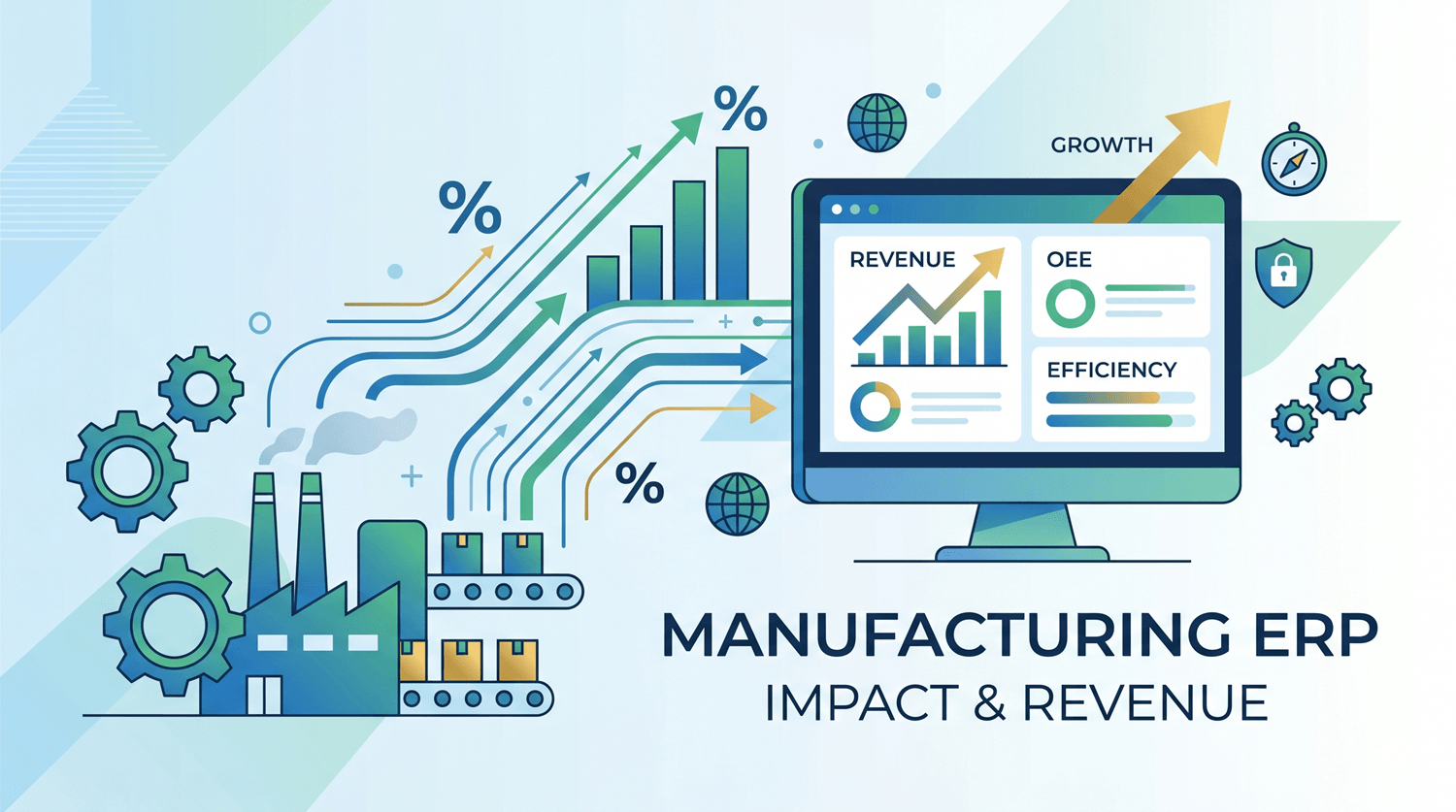
For co-founders and C-suite executives in the manufacturing sector, the business landscape often feels like managing a complex, moving puzzle. Balancing supply chain disruptions, fluctuating material costs, shop floor efficiency, and demanding delivery timelines requires more than just hard work—it demands absolute operational visibility.
When a manufacturing business scales, relying on siloed spreadsheets, legacy software, or fragmented communication channels becomes a massive liability. This is where an Enterprise Resource Planning (ERP) system transitions from a mere IT upgrade to a core strategic necessity.
Here is a deep dive into how a modern manufacturing ERP impacts business operations, unlocks hidden revenue, and serves as the ultimate dashboard for executive decision-making.
1. The Core Architecture: What is a Manufacturing ERP?
At its core, a manufacturing ERP is a centralized software platform that integrates every facet of a production business into a single source of truth. Unlike generic accounting or CRM tools, a specialized manufacturing ERP bridges the gap between the physical shop floor and executive strategy.
Key Technical Pillars of Manufacturing ERP:
-
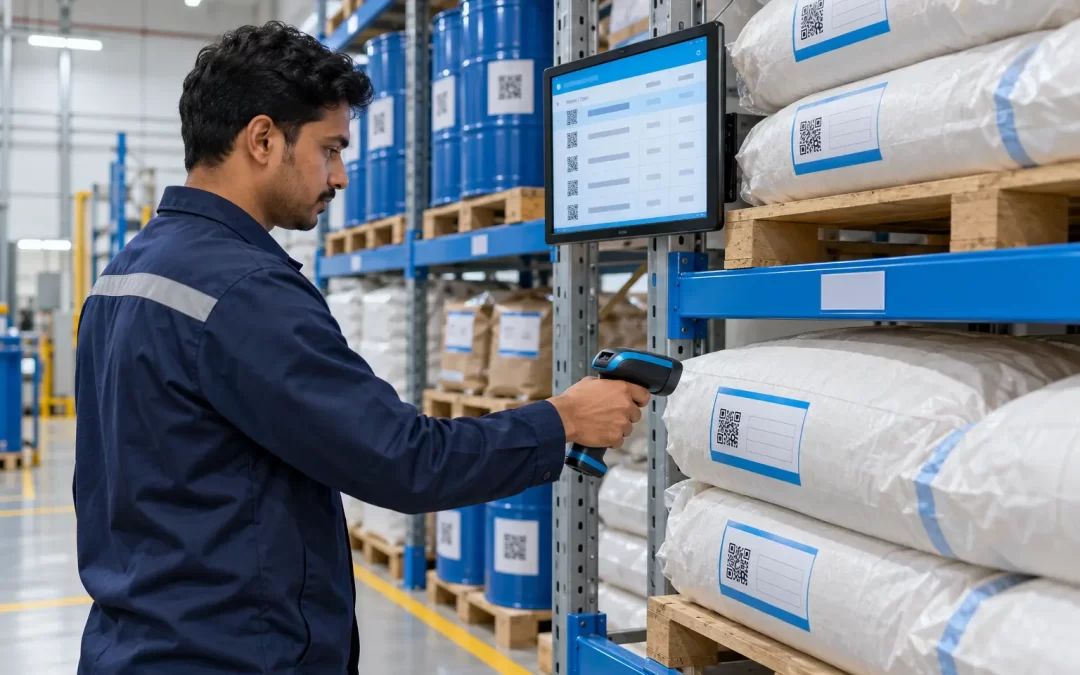
MRP (Material Requirements Planning): Automatically calculates what materials to buy, how much, and when, based on production schedules and current inventory.
-
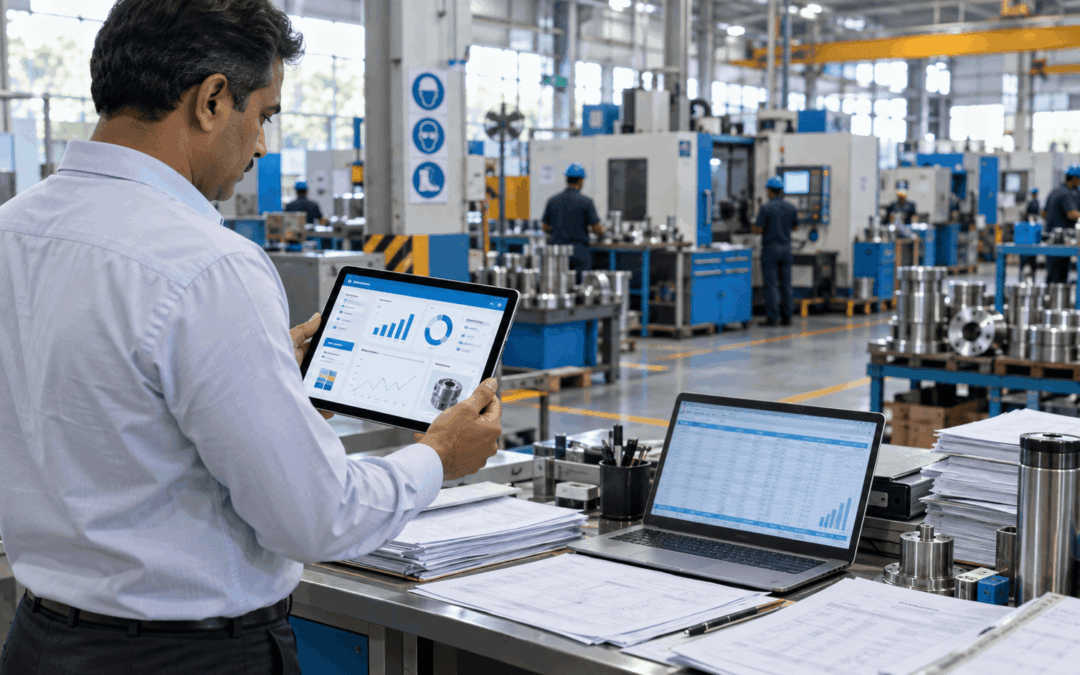
MES (Manufacturing Execution System) Integration: Connects directly with shop-floor machinery and IoT sensors to track real-time machine uptime, cycle times, and output.
-
PLM (Product Lifecycle Management): Tracks a product from initial design and Bill of Materials (BOM) creation through to final production.
-
Unified Ledger: Ensures every physical action (e.g., consuming raw steel, shipping a finished product) instantly triggers the corresponding financial transaction.
2. Driving Top-Line and Bottom-Line Revenue
Eliminating Cash Drag in Inventory
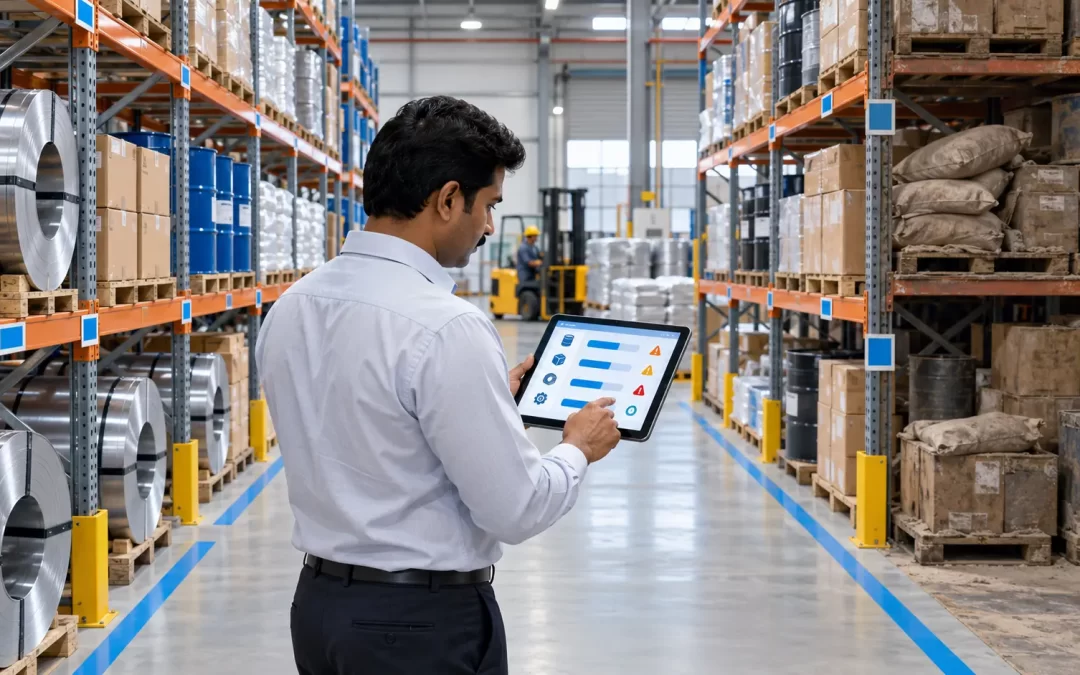
Unused raw materials and unsold finished goods represent trapped capital. An ERP uses predictive demand forecasting and Just-In-Time (JIT) inventory models to ensure you only purchase what you need. Reducing inventory holding costs by even 15% can free up hundreds of thousands of dollars in liquidity for expansion.
Maximizing Shop Floor Margin (OEE)
By tracking Overall Equipment Effectiveness (OEE), the ERP highlights bottlenecks on the production line. If a specific CNC machine or assembly line is underperforming, executives can see the exact cost of that downtime and reallocate jobs dynamically, protecting profit margins on every run.
Dynamic and Accurate Pricing
In an inflationary market, material costs change daily. If your sales team is quoting clients based on last month’s spreadsheets, you are actively losing margin. A connected ERP updates the standard and actual costs of products in real-time, allowing sales teams to quote with precise, high-margin accuracy.
3. The Executive Dashboard: Steering the Business with Real-Time Data
For co-founders and CEOs, the greatest value of an ERP is the elimination of “blind spots.” Instead of waiting for end-of-month or end-of-quarter financial statements to understand performance, an ERP offers a live pulse of the company.
Critical Metrics for the C-Suite:
| Executive Role | Key ERP Metric Tracked | Business Impact |
| CEO / Co-Founder | Cash-to-Cash Cycle Time | Tracks how fast a dollar invested in raw materials travels through production and returns as revenue from the customer. |
| CFO | Actual vs. Standard Cost Variance | Instantly flags if production runs are costing more than budgeted, preventing margin erosion. |
| COO | On-Time In-Full (OTIF) Rate | Measures delivery reliability, which directly correlates with customer retention and brand equity. |
| VP of Sales | Pipeline Capacity Matching | Shows whether the factory floor can actually handle a massive new contract before the deal is signed. |
With automated executive dashboards, co-founders can log in and instantly see cash flow positions, capacity utilization, and scrap rates. This shifts executive leadership from reactive firefighting to proactive strategic steering.
4. Modern IT Solutions: Choosing the Right Architecture
Implementing an ERP is a long-term infrastructure decision. Co-founders and IT leaders must evaluate the architectural model that best fits their scaling objectives.
Cloud vs. On-Premise vs. Hybrid
-
Cloud ERP (SaaS): Highly recommended for rapidly scaling manufacturers. It offers lower upfront capital expenditure (CapEx), automatic updates, robust cybersecurity, and allows executives to access data from anywhere globally.
-
On-Premise ERP: Chosen primarily by highly regulated industries (e.g., defense or aerospace manufacturing) requiring total local control over data sovereignty.
-
Hybrid ERP: Keeps core operational data on the local shop floor to prevent internet-latency issues, while syncing financial and analytics data to the cloud for executive review.
Next-Gen Tech: AI and Industry 4.0
Modern enterprise solutions are deeply integrated with Industry 4.0 technologies. Predictive AI within the ERP can analyze historical machinery data to predict a breakdown before it happens, scheduling maintenance during off-hours. Machine learning algorithms can also analyze historical vendor performance, automatically routing purchasing orders to the most reliable, cost-effective suppliers.
5. Blueprint for a Successful Executive Rollout
An ERP implementation is fundamentally a change-management project, not just an IT project. To ensure a high return on investment, the executive team must champion the rollout:
-
Define Clean Data First: An ERP is only as good as the data fed into it. Clean up your existing Bills of Materials (BOMs) and client databases before migration.
-
Appoint Internal Champions: Pick leading operators from both the finance team and the shop floor to lead the transition.
-
Phase the Deployment: Don’t flip the switch on everything at once. Start with core financial and inventory modules, then scale to shop floor scheduling and advanced AI forecasting.
0 Comments